Hydrogen as a key technology for the energy transition
The growing demand for transportation, coupled with increasing urbanisation and rising carbon dioxide (CO2) emissions, is putting more and more pressure on policymakers, industry and science to develop sustainable energy systems for the global mobility in the future. The more than 1.6 billion registered vehicles worldwide currently emit more than 8 billion tonnes of CO2 every year. At the same time, the number of vehicles globally is growing by more than 1.5 vehicles per second, pushing annual CO2 emissions up by around 3.3 t every second. This trend clearly shows that incremental opti-misations alone will not be enough to meet the climate goals set by policymakers and society for the transport sector. In order to successfully tackle the core environmental challenges of global mobility, the energy supply of the future needs to fulfil three main criteria: climate neutrality, security of supply, and economic viability. Renowned research institutions such as the Department of Advanced Powertrains (ALF) at Chemnitz University of Technology’s Institute for Automotive Research (IAF), led by Professor Thomas von Unwerth, consider hydrogen (H2) to be a promising option for decarbonising the energy sector through large-scale replacement of fossil energy carriers.
The researchers do not view the use of H2 in fuel cells as a silver bullet, but rather as an essential building block of the energy transition, alongside battery-electric powertrains and, in certain applications, synthetic fuels.
Prof. Dr. Thomas von UnwerthThis defines the scope of what we mean by technology neutrality in the powertrain sector. By contrast, the burgeoning debate about the continued use of fossil fuels in the future is not useful at all.
Technological breakthroughs in fuel cell technology alone will not be enough to ensure market success in the future. The important thing is how they are integrated into society and economic systems. This was the theory put forward by Erik Pohl from the Department of Advanced Powertrains to kick off his keynote at FVV’s autumn conference. Progress depends on scaling up electrolysis and fuel cell technologies, integrating systems into electricity, gas, and mobility networks, developing innovative materials to reduce the use of critical raw materials, establishing open research platforms and international cooperation, and implementing a sustainable training policy. »If all of these factors come together, hydrogen can indeed become a key technology for a post-fossil society. With its strong research landscape, technical expertise and industrial base, Germany has an outstanding opportunity to play a leading role here,« says von Unwerth.
Electrolysis and hydrogen generation potential
When it comes to the market potential of H2 concepts, energy costs are a decisive factor. At present, these costs largely depend on the production pro-cess. While ›green‹ H2 is CO2-neutral, it comes with high production costs. Other processes to produce ›black‹ (from coal) or ›grey‹ (from natural gas) hydrogen, for example, are much less expensive and already available on a large scale today; however, they still generate CO2 emissions. »To drive market activation forward, it may be useful in the short term to use the full colour spectrum of hydrogen generation, rather than waiting for sufficient green hydrogen to become available,« said Pohl at the conference.
Erik PohlThe transition to an H2- based energy system definitely requires a systematic approach that ranges from renewable power generation at a global scale to electrolysis, storage and use.
He emphasised that efficiency losses in electrolysis do not disqualify the technology per se, provided that sufficient ›free‹ renewable energy is available. In 2024 alone, more than 9 TWh of potentially usable green electricity in Germany was curtailed due to grid bottlenecks – energy that could be used for H2 generation in future. However, Pohl is clear: »Even if we use this energy in the form of hydrogen, it will not be enough to make Germany energy self-sufficient. Instead, we, as an energy-intensive industrial country, will certainly need to import energy, just as we do today.« Global H2 generation potential is projected to reach hundreds of millions of tonnes per year by 2050. In addition to further technical development of the electrolysers – particularly in terms of efficiency, material use and scalability – transport, storage and integration into the energy system are becoming increasingly important. The term ›transportable electricity for long-duration storage‹ describes the advantage hydrogen offers compared to variable renewable energy carriers.
Battery and fuel cell – complementary technologies
The ›battery vs fuel cell‹ debate is not a question of either/or. In fact, the two technologies complement one another. While battery-electric powertrains primarily offer benefits in urban transport and in the low-load spectrum, H2-based concepts are particularly suited to long-distance and heavy goods transport, and rail and maritime applications. »The refuelling times of H2 lorries are com-parable to those of diesel-powered vehicles, and the existing infrastructure can be used as a basis. For electric lorries, on the other hand, the entire network of parking areas along long-distance routes needs to be equipped with charging stations to meet demand even at peak times. Our analyses show that it will be almost impossible to build the infrastructure in Europe within a realistic time frame,« explains von Unwerth. Other aspects also come into play, such as the market for used lorries. Vehicles decommissioned in Europe today are often sold on internationally, for example to Africa. This business model is likely to be problematic for battery-electric lorries, as many regions of the world lack adequate charging infrastructure. As Pohl explained in his presentation, fuel cell vehicles could have better long-term market prospects in this context.
Critical raw materials and sustainability
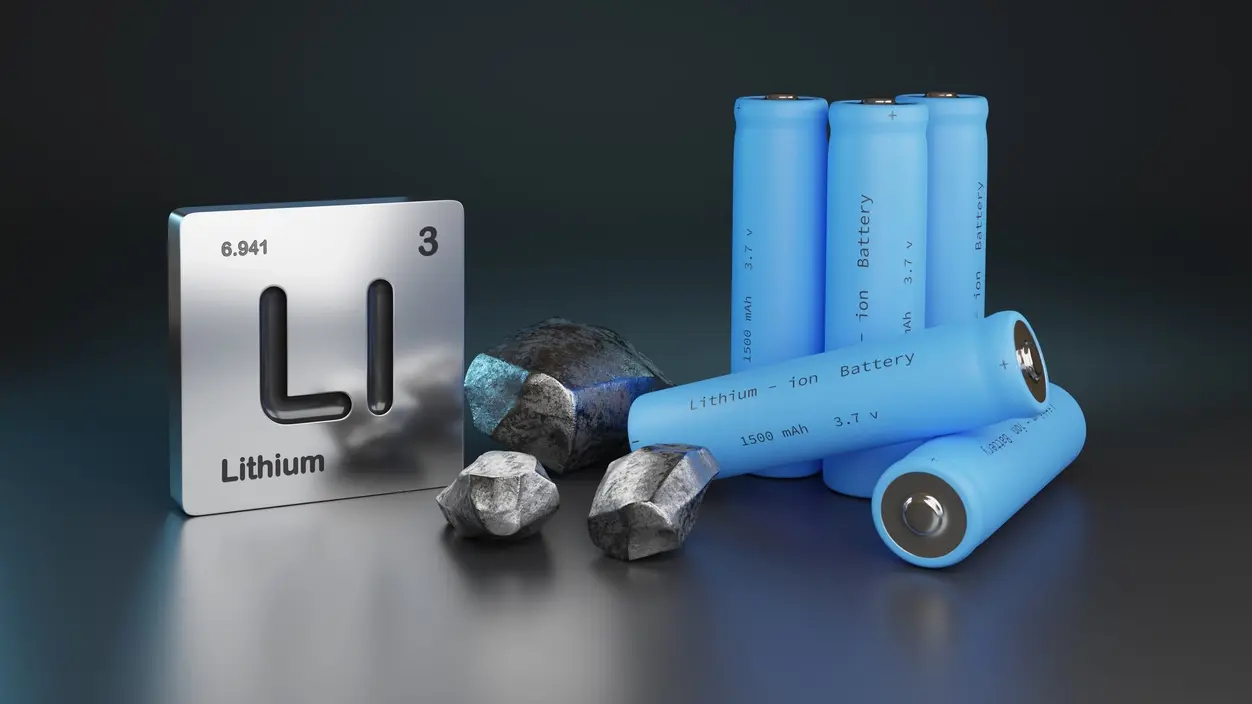
Dependence on raw materials is one of the greatest challenges in introducing future powertrain systems at an acceptable cost. As well as rare earths, the focus for battery-electric powertrains is largely on lithium for the battery, while fuel cells predominantly rely on platinum. Platinum has been used for many years in automotive catalysts, resulting in a well-established market structure that can be readily adopted when internal combustion engines are replaced by fuel cell vehicles. For lithium, by contrast, a stable market landscape has yet to form, making market distortions likely, especially in the ramp-up phase. In the long term, however, a closed-loop recycling concept will have to be developed for all raw materials to ensure sustainability.
The Department of Advanced Powertrains’ latest research focuses on material substitution and recycling, and on reducing critical raw materials. In addition, strategies for multi-criteria optimisation of stack and system components are being developed to improve efficiency, thermal management and lifespan. Artificial intelligence is increasingly supporting operating strategies, simulations and materials science, such as in identifying optimum catalyst compositions or predicting degradation mechanisms.
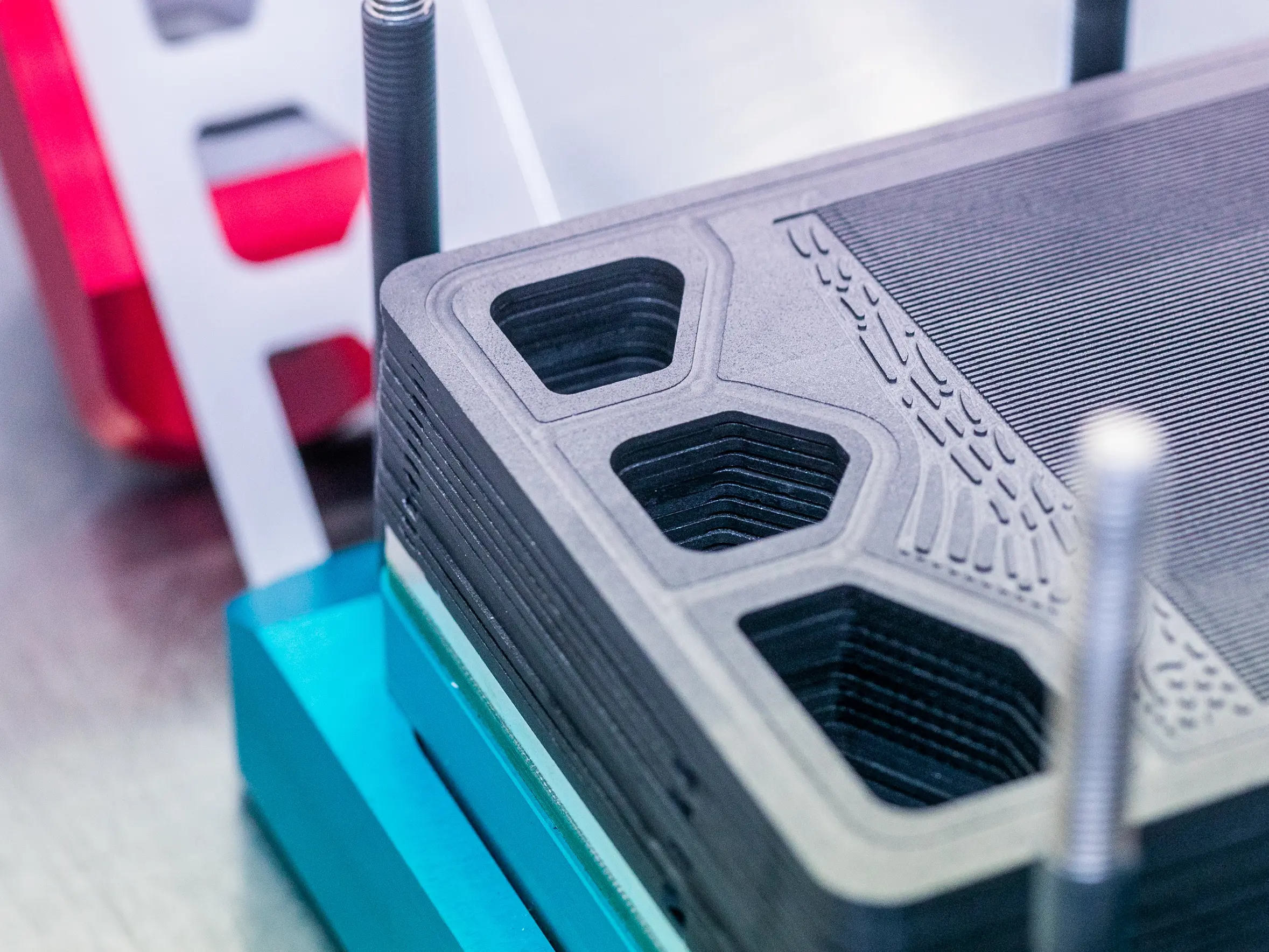
A core element of the research in Chemnitz is the ›open source stack‹ (OSS) concept. Its goal is to establish an open research platform for fuel cell and electrolysis applications, fostering transparent and collaborative further development.
Erik PohlOpen source approaches such as this encourage the exchange of expertise between universities, industry and start-ups, thus accelerating technology transfer.
The Department of Advanced Powertrains is also involved in various European research programmes, including projects in the ›Fuel Cells and Hydrogen Joint Undertaking‹ (FCH JU), part of Horizon 2020. In order to meet the rising demand for specialist staff, Chemnitz University of Technology is now offering Germany’s first master’s programme for hydrogen technologies, combining basics of thermodynamics, electrochemistry and system technology with practical research and collaboration with industry. »We are thus closing the key gap between academic training and industrial application,« explains von Unwerth. The research results will then be transferred via the HZwo e.V. hydrogen technology cluster, which comprises more than 160 partner companies and also sponsors the Chemnitz-based Hydrogen Innovation Centre (HIC), the national innovation and technology centre funded by the federal government. //
Other interesting reads
LINKS
- Technical and political perspectives in carbon management
- HZwo - The Hydrogen Technology Cluster
- Empowering a moving society: view our RTD Performers