07.01.2026

Max Decker has been appointed Deputy Managing Director

At its autumn meeting, the members of the Executive Committee of FVV eV appointed Max Decker as new Deputy Managing Director. In this role, he will lead the research programme as well as the research association’s knowledge transfer and networking events. Max Decker forms part of the FVV’s management board alongside Managing Director Martin Nitsche, Deputy Managing Director Mathias Zelinger and the two Chairmen, Prof. Dr Markus Schwaderlapp and Christopher Steinwachs.

Photos: Sarah Kastner

Max Decker, MSc (born 1987) studied mechanical engineering at Otto von Guericke University Magdeburg. In 2019, he joined the FVV as a project manager for pre-competitive research within the framework of the Industrial Collective Research (IGF) programme and has since been overseeing projects in the fields of materials science and recycling, including critical raw materials and additive manufacturing, as well as zero-impact emissions, including non-exhaust emissions such as brake dust or tyre wear.
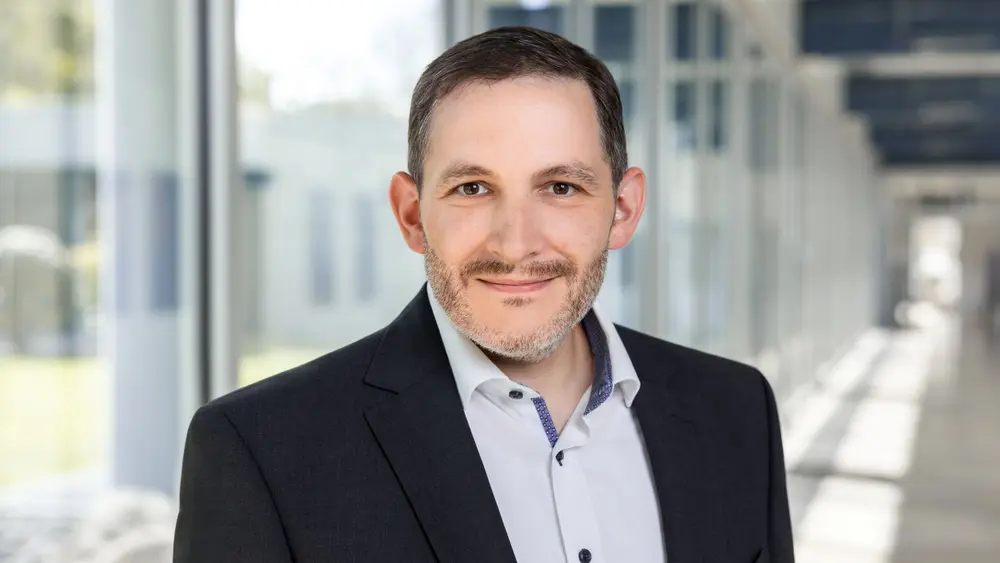
Max Decker - Deputy Managing Director of FVV // © FVV

Previously, from 2015, he had worked as a technical manager, initially in the field of emissions legislation and type-approval within the Traffic Department of the VDMA eV. After moving within the VDMA Group to the Engines and Systems Association, he was responsible for the areas of international emissions legislation for engines and mobile machinery, as well as Power-to-X technologies.

In July 2022, Max Decker was appointed Managing Director of the German Research Association for Automation and Microelectronics (DFAM) eV. Like the FVV, DFAM is an Industrial Research Association within the Mechanical Engineering Research Federation (FKM) eV – the VDMA’s knowledge and cooperation platform for Research + Innovation and Industrial Collective Research (IGF).
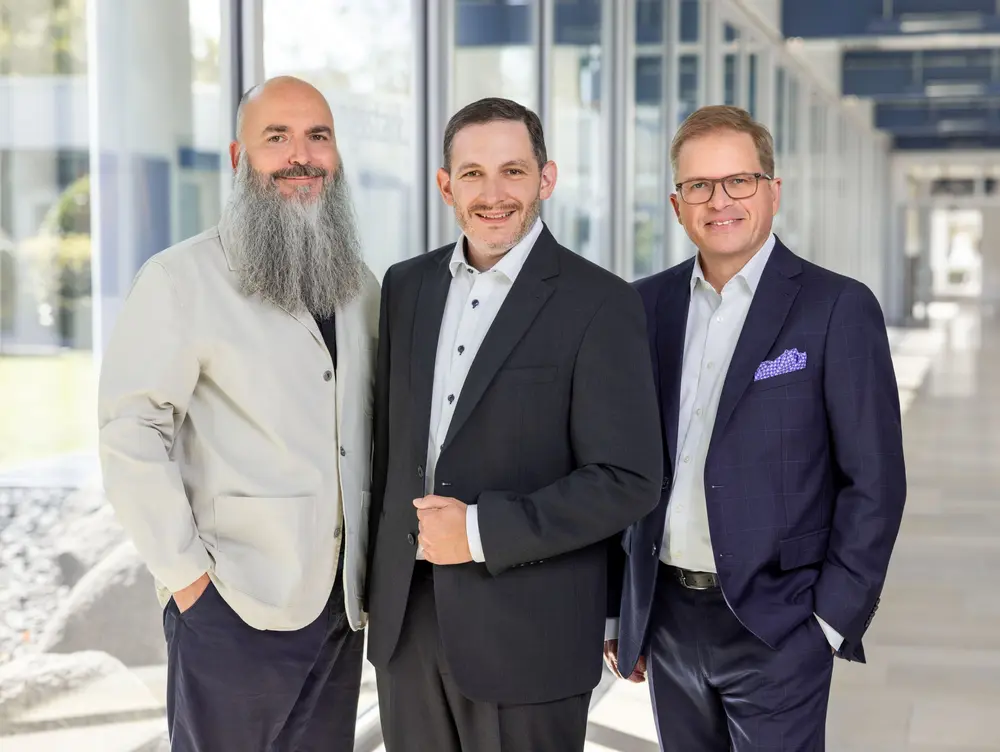
The FVV Management Team (from left to right): Mathias Zelinger, Max Decker and Martin Nitsche // © FVV

In addition to the growing diversity of topics in pre-competitive research into sustainable energy conversion systems, the generational change within the FVV’s innovation and transfer network presents a challenge. Remaining technologically future-proof while preserving a transgenerational identity – this is the task to which the FVV’s newly completed management team intends to devote greater attention.

The FVV organises facts- / field-based collective research on sustainable powertrain and energy systems of the future for an international network of science and automotive, mobility and energy industries. As a service provider for innovative businesses, especially SMEs, we organise solutions-oriented research projects and communicate their key results and innovation potential.

In the innovation + transfer network of the FVV, globally operating manufacturers of energy carriers, energy systems, sustainable powertrains and prime movers such as vehicle / aircraft / industrial engines, fuel cells and turbo machines, together with their suppliers and development service providers, conduct in close cooperation with universities and other research institutions pre-competitive, industrial collective research on future technologies. The aim is to operate energy converters – engines, hybrid powertrains, turbines, compressors, turbochargers and fuel cells – with renewable energy sources in new, (partly) electrified, integrated and digitalised conversion systems in a more efficient, cleaner and sustainable way – to the benefit of society, climate, environment and industry.

Sustainable energy conversion systems facilitate individual mobility, transportation, energy supply and industrial added value. The innovative power of the industry and its economic success make a significant contribution to social prosperity. As a non-profit organisation, the FVV supports the evolution of its members - small, medium and large companies – and the promotion of young scientists. The research association has implemented more than 2,000 research projects since it was founded in 1956.

Industrial Collective Research (IGF) is a successful Europe-wide, open-topic and pre-competitive funding programme of the Federal Ministry for Economic Affairs and Energy (BMWE) that provides small and medium-sized enterprises (SMEs) with easy access to applied research and the latest research results. In the IGF, companies or associations, research institutions and RTD performers jointly determine the research needs and research topics of their industry. The support of the research projects by the companies guarantees the practical relevance of the research activities. The results of IGF projects are publicly available to all interested companies on equal terms. In this way, the IGF strengthens the competitiveness of SMEs in Germany and thus makes a significant contribution to Germany's innovation sovereignty. #wearetransfer